


I Visit Japan Olympic Museum, Tokyo
Updated: 5 days ago
Discover Tokyo's rich Olympic legacy in Japan's Olympic Museum, promoting peace, resilience, friendship and Olympic values.

Why would anyone carve out a few hours from their Tokyo travel itinerary to visit an Olympic museum? There's so much to do in the city I hear you say. But once you've ticked off the tourist essentials, temples, sushi, Harajuku, Tokyo Tower and perhaps even DisneySea, you might find yourself needing an escape from the noise and neon for a few hours. Some of us find our zen not in a shrine, but in a museum.
And brand museums are my thing. That's why I dragged my husband away from the hustle and bustle of Ginza's shopping streets to the calm and orderly Japan Olympic Museum.

The Olympic Games are a brand, one of the most recognisable in the world. And as I always say, every brand museum tells a story.
Every four years, the Olympics become part of our lives. I’m glued to my TV, and each of us has our own Olympic memories. My earliest include watching the Coe versus Ovett rivalry at Moscow 1980 and cheering Daley Thompson to back-to-back decathlon titles. Steve Redgrave winning rowing gold at five consecutive Olympics had me trying to convince my son that those hungover 5am rows on the freezing waters of Aberdeen might pay off. He only lasted a few weeks, so I had to give up on the idea of being interviewed by Clare Balding beside the winners’ podium.
When the flame goes out, I always feel the post-Olympic blues. It leaves me wondering not only about what the athletes put themselves through in training, but about the work behind the scenes to bring an event of this scale to life. What happens to the host city? How are the venues planned and built? What does it take to organise the biggest sporting event in the world?
Those were the questions I wanted to explore at the Japan Olympic Museum.
As well as exploring more than a century of Olympic history, the museum tells the story of the Tokyo 2020 Games, postponed until 2021 because of the pandemic. I was looking forward to revelling in nostalgia and memorabilia. I hadn’t expected to get quite so involved in testing my own sporting abilities!
The Olympic Museum history
The Japan Olympic Museum is part of the Olympic Museums Network (OMN), established by the International Olympic Committee in Lausanne in 2006. The network connects museums around the world, sharing knowledge about collections and museum design. At the time of writing, it included 34 museums, three of them in Japan.
Japan’s Olympic story is about more than hosting the Games. It began with the country’s first participation in 1912, and the museum brings those athletes and their experiences into view. I realised I knew much less about that side of the story than I thought.
The museums also offer a chance to highlight the broader benefits of hosting the Games for the local community. Despite significant investment, ther majority of modern Olympic Games often serve as loss leaders for their host cities. The Tokyo Games, for instance, incurred a staggering cost of $13 billion (1.4 trillion Japanese yen), twice the amount forecasted in 2013 when Tokyo was awarded the hosting rights.
Opened in September 2019, less than a year before Tokyo was due to host the Games, the museum is housed in Japan Sport Olympic Square, a building complex designed by Mitsubishi Jisho Design. When Tokyo bid for the 2020 Games, dubbed the “Recovery Olympics” in the wake of a devastating earthquake, tsunami, and nuclear disaster, few could have anticipated the additional hurdles ahead. The mere fact that the Olympics took place stands as a testament to the resilience and dedication of all involved in bringing the Tokyo Games to fruition.
Visiting the Japan Olympic Museum: What to Expect
The Japan Olympic Museum, Tokyo
The Japan Olympic Museum sits across the road from Japan's National Stadium in Shinjuku Ward, Tokyo. Designed by Kengo Kuma, the National Stadium hosted the opening and closing ceremonies as well as the athletics events for the Olympic and Paralympic Games in 2021.

Now used as a venue for national football and rugby matches, when my husband and I visited a few years ago, we could hear energetic fans from within the stadium as we walked past. This wasn't a white elephant then. It was good to see the venues being used. As there was a match on, we could not explore the stadium tour, where visitors can walk the track field, see the torch and more. We'll save that for our next visit.

The Olympic rings scultpure gives it away. What was originally built as an administration building is now the home of the Japanese Olympic Committee, and the museum fills the lower two floors of the building. The surrounding land was developed as Tokyo Olympic Park and now features playgrounds, walkways, coffee shops and restaurants. It was a lovely way to while away an hour before our visit and was obviously popular with families and runners.

In the plaza we snapped photos of the scale models of Olympic cauldrons from each of the Games held in Japan.
The cast iron 1964 cauldron was crafted in Kawaguchi by a master caster, Mannosuke Suzuki. We discovered that tragically, Mannosuke passed away from exhaustion during an initial failed casting attempt. His son, Bungo Suzuki, took over the monumental task and successfully finished the 4 tonne final structure.
If you want to see Oki Sato's original flower-blooming 2020 cauldron, the first-ever Olympic cauldron fueled by clean-burning hydrogen gas, you have to head across Tokyo to the waterfront district.

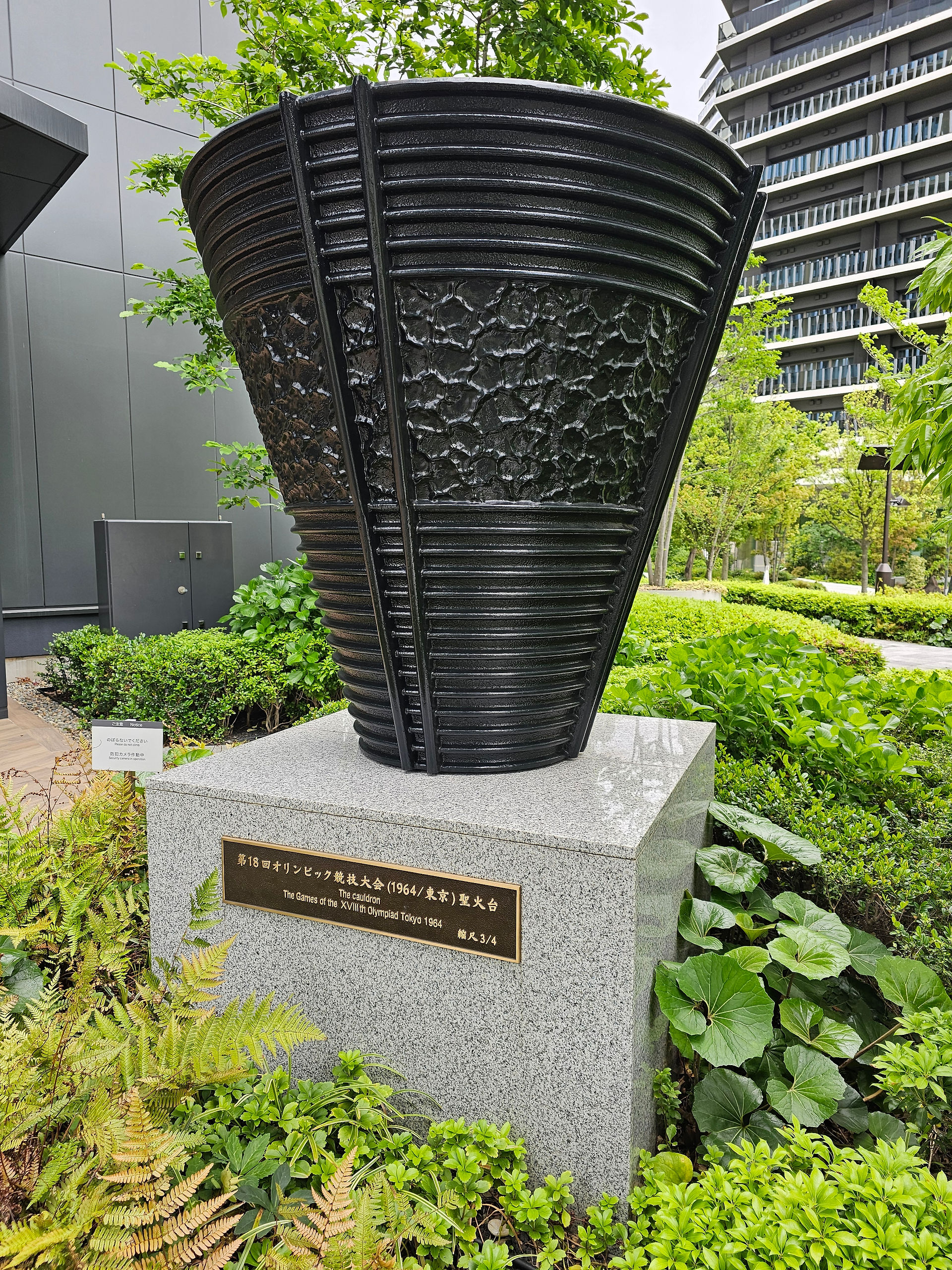
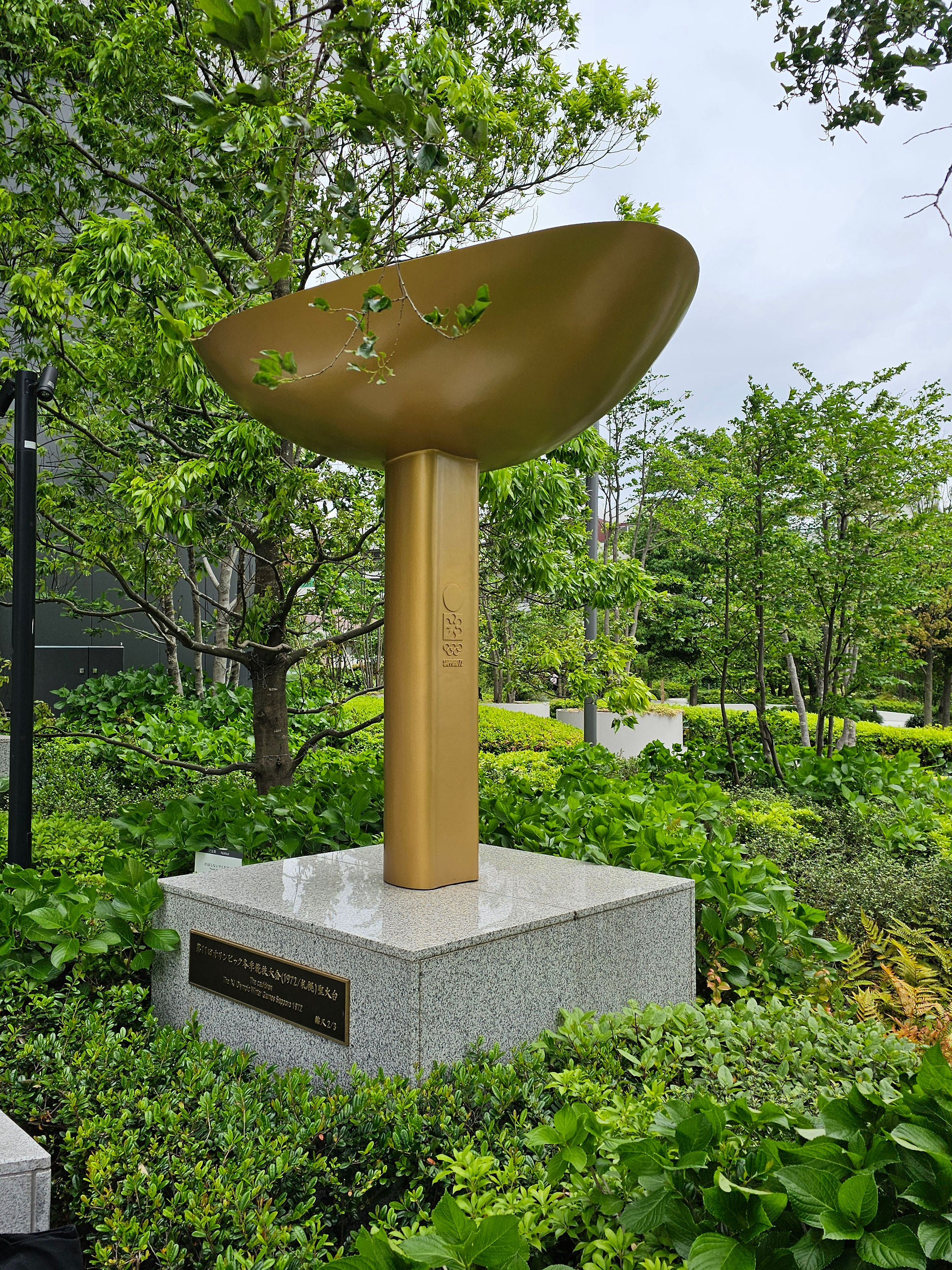
Even the pavement has fun facts on it, such as the distance Japan's Mikio Oda leapt to, to win the men's triple jump in the Amsterdam games in 1928, becoming Japan's first-ever Olympic gold medalist. We had a quick jump ourselves and came up pitifully short.

Japan Olympic Museum, Tokyo - Floor 2
The museum is divided into three sections. Upon arrival, visitors ascend to the second-floor Exhibition Area, past the bust of Pierre de Coubertin, co-founder of the International Olympic Committee, and its second president, known as the father of the modern Olympic Games.

There's free Wi-Fi and a complimentary audio guide, but as all the displays featured text in both English and Japanese, we never needed it. And being a Japanese museum, it was well organised, exceptionally clean and everything worked!

From the ancient to the modern Olympic Games
The exhibition starts with the ancient Olympics, back to the 8th century BC, which provided a fascinating reminder of just how much the Games have changed. There are interactive displays, so you can get a little more involved than simply reading information panels.

You can grab hold of a few replicas of equipment used in the sports back then.


The exhibition moves on to the history of the modern Olympic Games.

On the wall hangs a flag used in the 1964 Tokyo Olympics.

We learned that the iconic five-ring emblem, conceived by Pierre de Coubertin in 1913, actually represents a colour from each of the participating nations' flags from the 1912 Games. Touchscreens offered further insights into the design, while display cases showcased original drafts of the logo.


Japan's first participation at the Olympic games was in July 1912 at the 5th Olympic Games in Stockholm.
The wall graphic illustrated how the number of participating countries has fluctuated over the years. Just 28 countries took part in 1912. Compare that to 205 teams in 2021.

One of the highlights in this gallery are the Olympic torches from previous Summer and Winter games.

We had fun checking out the different designs. It's easy to overlook how much thought goes into these objects when we're watching the flame being carried into the stadium.


The historical information is peppered with artefacts, and never overwhelming. There's something here for everyone, even those not from Japan.

One of the things I particularly enjoyed was seeing how the visual identity of the Olympic Games has evolved. The posters, logos and pictograms are a fascinating reflection of their time, with each host city bringing its own design style to the event. As someone with a background in commercial design, I always enjoy seeing how these visual elements come together to create a recognisable identity for such a huge event.

What I hadn't realised was that Tokyo 1964 was the first Games to use a coordinated system of pictograms for sports and facilities, making information easier to understand for visitors who didn’t speak Japanese. It’s hard to imagine the Games without pictograms now, but this was a real turning point in how they communicated with the world.

The designers behind the Athens 2004 Games came up with fluid lines, thick bodies, and artistic textures as a modern adaptation of ancient Greek black-figure vases.

I particularly liked Calgary 1988's roundels.

The exhibition displays also show how much the Olympic Games have changed over the years, particularly when it comes to who gets to take part. Women were first allowed to compete at the Paris Olympics in 1900, although their opportunities were very limited. 22 ladies took part in tennis, sailing, croquet, equestrian and golf. It has taken a long time to reach the point where women compete in every Olympic sport, and Paris 2024 was the first Games to have an equal number of male and female athletes.

One item that caught my eye was a Barbie doll wearing a hijab. It was created in the likeness of American fencer Ibtihaj Muhammad, who made history at the Rio 2016 Olympics as the first American to compete at the Games wearing a hijab. I thought it was a lovely addition to the exhibition. It's a small thing, perhaps, but it shows how the idea of who an Olympic athlete looks like has changed too. As the saying goes, "You have to see it to be it."


Japan's Olympic hosting story: Tokyo, Sapporo and Nagano
Next up was a section dedicated to Japan's hosting of, and participation in, previous Olympic Games. Japan has hosted the Summer Olympics in Tokyo in 1964, and the Winter Olympics in Sapporo in 1972 and Nagano in 1998.

The 1964 Tokyo Games were particularly significant. They were the first Olympic Games to be held in Asia and came at a time when Japan was rebuilding its international standing following the Second World War. The Games marked a major moment in the country's post-war recovery and growing confidence on the world stage.
Though the financial cost of hosting can be eye-watering, there can be a lasting legacy too. The 1964 Games helped accelerate major infrastructure projects, including the Shinkansen, Japan's first bullet train. The 1964 Games also marked a technological milestone as the first to be televised by satellite and featured the debut of computers for timing and scoring.

Eight years later, Sapporo made history by hosting the first Winter Olympic Games to be held in Asia. Japan enjoyed a memorable sporting moment too, with its ski jumpers taking all three medals in the 70-metre event. It transformed Sapporo into a major international winter sports and tourism hub on Hokkaido, our next destination, so tagging on a visit to the Sapporo Olympic Museum seemed a great idea.


The Winter Games returned to Japan in 1998, when Nagano welcomed athletes from around the world. Nagano also has an Olympic museum. That's for another visit.

It was fascinating to see these different chapters of Japan's Olympic story brought together. The photographs, memorabilia and sporting artefacts help explain how the Games have become part of the country's modern history.

There is also information on how Tokyo and the organising committee had to adapt to host the postponed 2020 games.


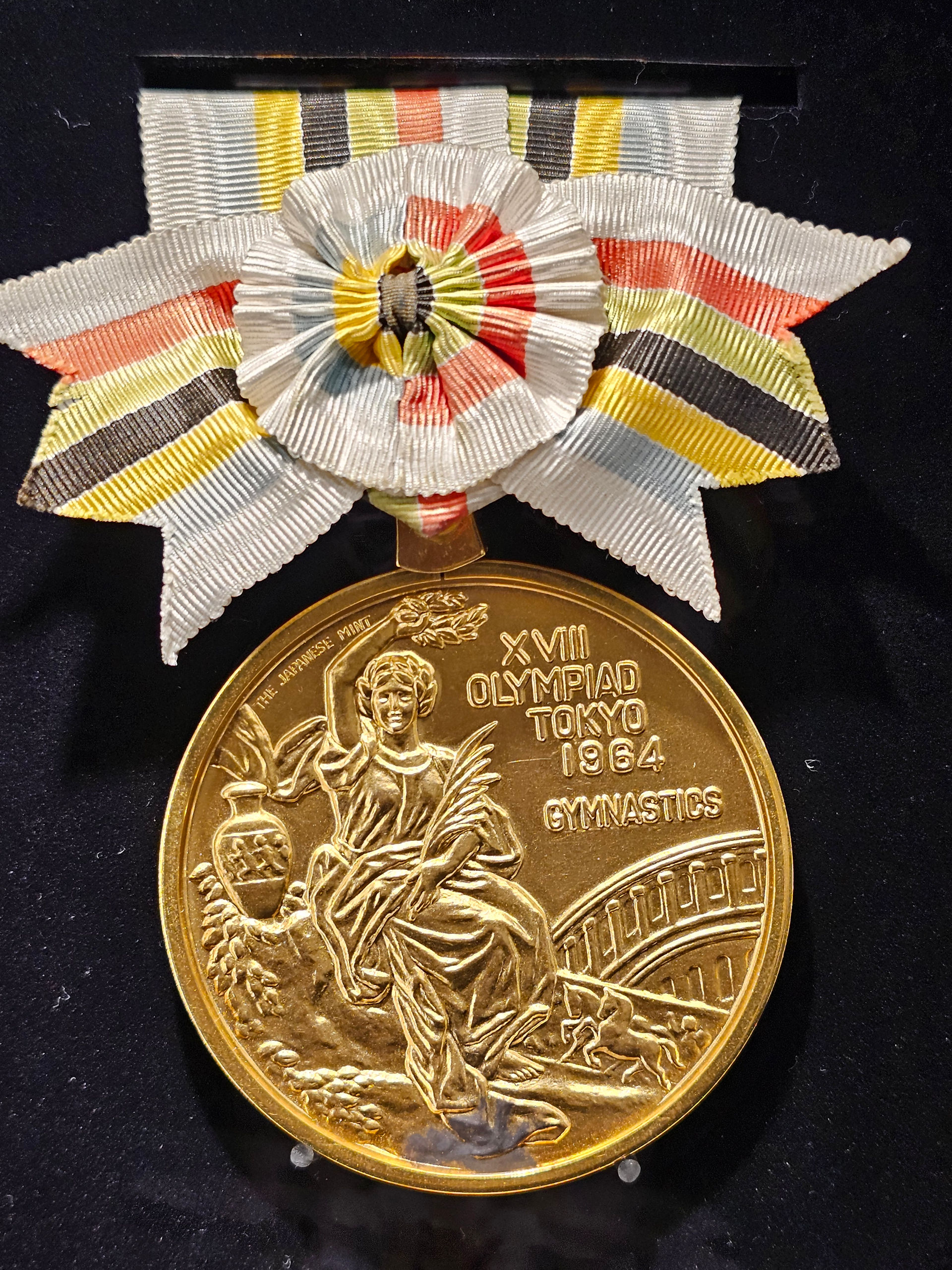
The different Olympic medals showcase how design can change over the years. Sapporo's was very much of the 1970's and yet the design from 2020 harked back to images of the ancient games.


“Maboroshi no Orinpikku” — “The Olympics that never were.”
Now for the story we never knew about before our visit, and our personal highlight - the intriguing history of the Tokyo 1940 Olympic Games. At that time, the Summer and Winter Games were held in the same year, though not always in the same country. The 1940 Winter Games were scheduled for February in Sapporo but were cancelled due to World War II. The Summer Games, planned for September in Tokyo, were postponed because of the Sino-Japanese War that erupted in July 1937. They were set to be relocated to Helsinki, Finland, but were ultimately cancelled in 1940 as the war intensified. It wasn’t until the 1948 London Games that the Olympics resumed as an international event.

1940 was to be a gala year for Japan. The summer games would have coincided with plans to commemorate the 2,600th anniversary of the ascension of Jimmu, the first emperor of the Yamato Dynasty, and the country even considered hosting the 1940 world exposition too. Land was purchased, plans drawn up and venues constructed. Significant economic investment was made on infrastructure projects, such as transportation, sanitation and the building of hotels.

When, in 1938, the Japanese government made the decision to forego both the games, the country took a huge reputational and financial hit. However, it should also be remembered that there was a raft of athletes that missed their opportunity to showcase their talents in those missing Olympics, and sadly far too many of them perished in conflict.
Want to be an Olympic athlete?
Now for the fun bit! If you've ever wondered how you might fare against an Olympic athlete, this is your chance to find out. There are interactive challenges where you can try your hand at different sports. I discovered that my own sporting talents are perhaps better suited to watching than competing!

Phil tried to prove that he could be a late entrant for the GB skateboarding team, but decided that shooting was more age appropriate.

I decided not to share pictures of me falling over a hurdle, or losing my balance in a spin pretending to throw a discus. Graceful I am not. The Japanese visitors wondered what all the hilarity was.

If you are really lucky, you could win a medal, or at least try on a few replicas for fun. It's about as close as I will ever get.

Think: The Paralympic Games
Don't miss the gallery exploring the remarkable advances in technology developed for Paralympic athletes. It's fascinating to see how innovation in equipment and design is helping athletes push the boundaries of what is possible.

It made me think of some of the great Paralympic athletes, including British wheelchair racer Dame Tanni Grey-Thompson and sprinter Jonnie Peacock. I also came across Japanese wheelchair tennis champion Shingo Kunieda's adapted chair and tennis racquet. Widely regarded as one of the greatest wheelchair tennis players in history, Kunieda won four gold and two bronze medals across five consecutive Paralympic Games, from Athens 2004 to Tokyo 2020.

Japan Olympic Museum, Tokyo - Floor 1
In the Welcome Area we found a handy museum café, gift shop and the Olympic Studies Centre.
It was fun to compare kits new and old, in the History of Official Uniforms Exhibition, which featured all of Team Japan's uniforms and kit from the eight Summer Games and nine Winter Games since 1991, including items for the Paris 2024 games. How fashion changes!


I spotted a few team suitcases. I'd never really thought about an athlete's luggage allowance. I don't pack light at the best of times, so I can only imagine I might have to be more ruthless when travelling with an Olympic team.


For London 2012 the female athletes appeared to have uniforms inspired by air cabin crew!


I was thrilled to come across a stamp station. For those that don't know, many of Japan's attractions, and most of their train stations, have stamps that visitors can collect. Just bring a book with you, or pick one up in the fabulous Japanese stationery stores. Trust me, you'll enjoy a fun filled treasure hunt across the country.

Is a trip to the Japan Olympic Museum, Tokyo worth it?
Tokyo's Japan Olympic Museum turned out to be a really enjoyable way to spend a few hours. We hadn't quite expected to find so much to interest us, but there was far more to explore than we'd anticipated and it was a welcome respite from the hustle and bustle of Tokyo.
What I particularly enjoyed was the way the museum brings together the history of the Olympic Games, the people, the sporting achievements and the wider impact of the Olympic movement. We all have our own Olympic memories, and the displays brought many of mine flooding back. From medals, torches and mascots to posters, photographs and memorabilia, there was plenty to look at, with hands-on exhibits adding another dimension to the visit.
The museum manages to make a huge amount of information accessible and entertaining without losing sight of the people behind the Games. The entrance fee was very reasonable, and the staff we met were welcoming and helpful.
We enjoyed our visit so much that we decided to seek out the Olympic Museum in Sapporo too. It has also put the main Olympic Museum in Lausanne, Switzerland, firmly on our list for a future visit!
Plan your visit to the Japan Olympic Museum, Tokyo
Address
4-2 Kasumigaoka-machi, Shinjuku Ward, Tokyo 160-0013
Website: Japan Olympic Museum
How long was the visit?
Our visit lasted over 2 hours.
How much are tickets?
We paid for our tickets and this was not part of any advertising.
Adult tickets are just 500 yen and high school age children or younger are free. You do not need to book in advance.
Opening times
It's always worth checking with The Japan Olympic Museum for their current opening times, as they can vary.
When we visited they were open 6 days a week from 10 am to 5 pm (final entry 4:30 p.m.) and closed on Mondays, like a lot was in Japan.
Getting to the Japan Olympic Museum, Tokyo
The Japan Olympic Museum is a 5 minute walk from Exit 3 of Gaienmae Station on the Tokyo Metro Ginza Line, a 10 minute walk from Exit A2 of Kokuritsu-kyogijo Station on the Toei Oedo Line, and a 12 minute walk from Sendagaya or Shinanomachi Stations on the JR Chuo-Sobu Line (express trains do not stop here). There are no parking spots available so coming by public transportation is strongly recommended.
We used Google Maps to navigate our trip from our hotel to the museum. (Top Tip - get yourself an E Sim for your phone, an invaluable tool that saved us so much money and gave us nearly unlimited data)
Where we stayed for our visit to the Japan Olympic Museum, Tokyo
We were based in Ginza for the first 5 days of a 3 week trip around Japan.
We stayed at the Daiwa Roynet Ginza Premier in a Superior Double room, booked via Booking.com. The hotel has been our Tokyo base before and we enjoy the quiet location, steps away from excellent shopping and restaurants.

What to see and do around the Japan Olympic Museum, Tokyo
Tokyo has so many attractions, it's hard to choose just a few. These are just some that were close to the Olympic Museum.
Shinjuku Gyoen National Garden is less than 20 minutes from the Olympic museum. One of the city's largest and most popular parks, it is particularly pretty in spring when the cherry blossom is out, but we can recommend a visit for autumn colours in November too.
Meiji Jingu shrine is worth a visit any time of year. Just a 25 minute walk from the Olympic Museum, the Shinto shrine is particularly popular on a weekend, when if you're lucky, like we have been every time we have visited, you might get to see a traditional Japanese wedding. The grounds and architecture are a welcome break from the busy streets of the city.

The National Art Centre is just 20 minutes by local transport from the museum. This free to enter gallery, housed in an impressive architectural building, does not have a permanent collection. Instead, it is a large venue for changing art exhibitions.
20 minutes by local transport will get you to the heart of Shibuya and the famous Shibuya Scramble Crossing. Upwards of 1000 people cross at one time and it is one of the most photographed locations in Tokyo, surrounded by the bright lights and bustle of shops and restaurants.

Further reading
Sports fans, if you liked this article then check out our guide to Silverstone Museum, Indianapolis Motor Speedway Museum, and Louisville Slugger. More sports related visitor guides coming soon.
Please note - I'm real
I visit every brand visitor centre and experience myself. My feedback is real, based on a single visit, but informed by years of experience designing and exploring brand experiences all over the world.
I love writing my own reflections, diving into a brand's history, doing the research and looking at spaces through the eyes of a commercial interior designer. With over 30 years of working with customers, I also enjoy watching how guests interact with guides, displays and spaces. Everything I share is honest, personal and entirely human, not AI generated.
That authenticity is important to me, and if it's important to you and you want to work with me, or share your experiences or want to suggest others, then I am happy to be contacted via this website.
Photographs: ©Julie White unless noted otherwise.
Disclaimer - The views and opinions expressed are solely my own. I paid for the tours in full and any comments reflect my personal experiences on that day. Please drink responsibly. Please visit and garner your own thoughts and feel free to research the brand and the visitor centre in question.


Comments